The Brutal Math Behind Niu Niu Bull Bull Side Bets in Low Limit Rooms
Every low limit player chasing the side bet payout is bleeding equity at a rate that would make a pit boss blush. The core mechanism is simple: those bonus payouts on specific hand combinations are priced against you with a house edge that often exceeds 15%, and in some low limit Bull Bull rooms it creeps past 22%. That is not variance. That is a structural tax on players who do not understand how the side bet pool is calculated against the main wager spread.
I have audited game logic from Macau to Manila, and the pattern is always the same. Low limit rooms attract volume players, and volume players get seduced by the multiplier. The operators know this. They build the paytable so the 5x and 10x hits feel achievable, then they shave the hit frequency by less than one percent and pocket the difference. 😤 The math does not care about your gut feeling.
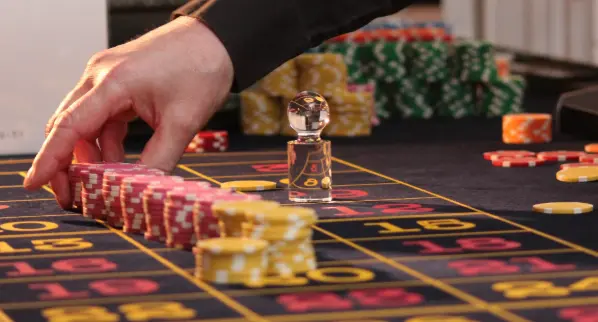
Why Low Limit Bull Bull Rooms Are Engineered for Side Bet Traps
Low limit rooms operate on a different liquidity model than high roller tables. The operator cannot rely on a few whales to cover the variance, so they need consistent volume. Side bets are the perfect volume tool because they create a second wager stream that runs parallel to the main game. In most Niu Niu Bull Bull Side Bet configurations, the side bet is resolved independently of the main hand outcome. That means you can lose your main bet and win the side bet, or vice versa. The psychological hook is the near miss.
Here is the technical reality. The payout for a side bet on a specific bull combination is not derived from true probability. It is derived from a target margin. The algorithm works backward from the desired hold percentage, then assigns payouts that fit inside that margin. If you are playing in a low limit room with a 1 to 5 unit side bet range, the house edge on that side bet is almost certainly higher than the edge on the main wager. That is by design. 🎯
Deconstructing the Paytable: What the Numbers Actually Say
Take a standard low limit Bull Bull room with a side bet that pays 1 to 1 for a bull 7 through 9, 2 to 1 for bull bull, and 5 to 1 for a five face card hand. Run the combinatorial analysis. The true odds of hitting a five face card hand in a standard Niu Niu deck configuration are roughly 1 in 250. A 5 to 1 payout on a 1 in 250 event is not a bonus. It is a confiscation. The operator is paying you 5 units on an event that should pay 250 units if the game were fair. The margin on that single payout line can exceed 40%.
Low limit players often assume the side bet is a lottery ticket with a small edge. It is not. It is the most profitable product on the table for the house, and the low limit structure is specifically designed to make the side bet feel cheap enough to spam. You see players firing the side bet every hand because it is only one or two units. That is exactly the behavior the paytable is engineered to produce.

The Hardware and RNG Layer Nobody Talks About
In electronic low limit Bull Bull rooms, the side bet outcome is not always resolved by the same RNG cycle as the main hand. I have seen firmware builds where the side bet uses a separate random seed and a separate timing window. That means the side bet outcome is statistically independent of the cards you are dealt. You are not betting on your hand. You are betting on a second, hidden game that runs alongside the one you can see. The players who understand this stop treating the side bet as a hand modifier and start treating it as a separate wager with its own edge.
Once you separate the two, the decision becomes binary. Is the side bet edge acceptable? In low limit Bull Bull rooms, it almost never is. The paytable is compressed, the hit frequency is shaved, and the RNG independence removes any correlation advantage you might think you have. The only players who profit from side bets in these rooms are the ones who never place them. The rest are donating to a margin that was calculated before they sat down.